

IEP

Why a Psycho-Ed or Neuropsych Evaluation Alone May Not Give Your Child the Full Picture


When a child is struggling in school, the first step many families are directed toward is a psycho-educational or neuropsychological evaluation — either through the school system or privately. These evaluations are an important and valuable part of understanding your child. They assess cognitive ability, academic achievement, processing speed, memory, and attention, and for many families they are the first time anyone takes their child's struggles seriously on paper.

But here is something that often surprises parents: these evaluations are not designed to assess language.

And for a significant number of children, language is exactly where the problem lives.

What These Evaluations Measure — and What Falls Outside Their Scope

Psychologists and neuropsychologists are highly trained professionals. Their evaluations typically cover:

  • Cognitive (IQ) testing

  • Academic achievement in reading, writing, and math

  • Processing speed and working memory

  • Attention and executive function

Language processing — how a child understands and uses spoken language, their vocabulary depth, sentence comprehension, semantic organization, narrative organization, phonological awareness, and word retrieval — falls outside the scope of what these evaluations are designed to measure. That is the specialized domain of a speech-language pathologist, and it requires its own dedicated assessment.

This is not a gap in the psychologist's skill. It is simply a recognition that no single professional can assess everything, and that children with complex profiles benefit most when multiple specialists contribute to the picture.

What Gets Missed Without a Language Evaluation

A child can score in the average range on cognitive testing and still have a language disorder quietly driving their reading difficulties, their struggles to express ideas in writing, or their challenges following classroom instruction. Without a speech-language evaluation in the picture, that piece goes unidentified — and unaddressed.

Many of the children we see at ThinkSpeech arrive with a thorough neuropsych or psycho-ed report in hand. The cognitive and academic picture is clear. What the family is still missing is an understanding of the language layer underneath — and once that is mapped, everything else starts to make more sense.

What a Multi-Disciplinary Assessment Looks Like

When a psychologist or neuropsychologist and a speech-language pathologist work together — or when their findings are reviewed and integrated — families get a genuinely complete picture. The cognitive profile and the language profile sit side by side, and patterns emerge that neither evaluation would reveal alone.

At ThinkSpeech Therapy, we have established relationships with a select group of trusted psychologists and are actively working to grow a model that brings collaborative, multi-disciplinary integrated assessments to Northern Virginia families. Our vision is that families never have to piece together the picture on their own — and that every child receives one integrated set of recommendations based on a holistic picture of who they are and how they learn. We welcome referrals from evaluation professionals and are always happy to consult on complex cases where the language piece may be contributing to what a family is experiencing.

Signs That a Speech-Language Evaluation Should Be Part of the Process

Consider requesting an SLP evaluation alongside or following a psycho-ed or neuropsych evaluation if your child:

  • Struggles with reading or spelling despite cognitive scores in the average range

  • Has difficulty organizing thoughts in writing

  • Struggles to follow multi-step directions or classroom instructions

  • Has word-finding difficulties or talks around words they can't retrieve

  • Has been diagnosed with dyslexia but therapy hasn't moved the needle

  • Has a history of epilepsy, a neurological condition, or early language concerns

  • Has a history of language or speech delay as a preschooler

You Deserve the Full Picture

A plan that addresses only part of what's happening can only produce partial results. Your child deserves a complete picture — and you deserve to understand it fully.

ThinkSpeech Therapy offers comprehensive speech-language evaluations for children, teens, and adults in Fairfax, Ashburn and across Virginia via telehealth. If your child has not yet been evaluated, we can coordinate a collaborative assessment with one of our psychology partners — so your family receives a complete, integrated picture from the very beginning. If your child has an existing psycho-ed or neuropsych report and you'd like to understand what the language piece might add, we'd love to connect.
7 Questions Every Parent Should Ask at a Dyslexia IEP Meeting

An IEP meeting for a child with dyslexia can feel overwhelming. You're sitting across from a team of educators, a document full of jargon is in front of you, and you want to advocate for your child — but you may not always know what to ask or where to push back. As a speech-language pathologist specializing in dyslexia and structured literacy in Ashburn, Northern Virginia, I work with families navigating exactly this situation. Here are seven questions that can make a real difference at your next IEP meeting.

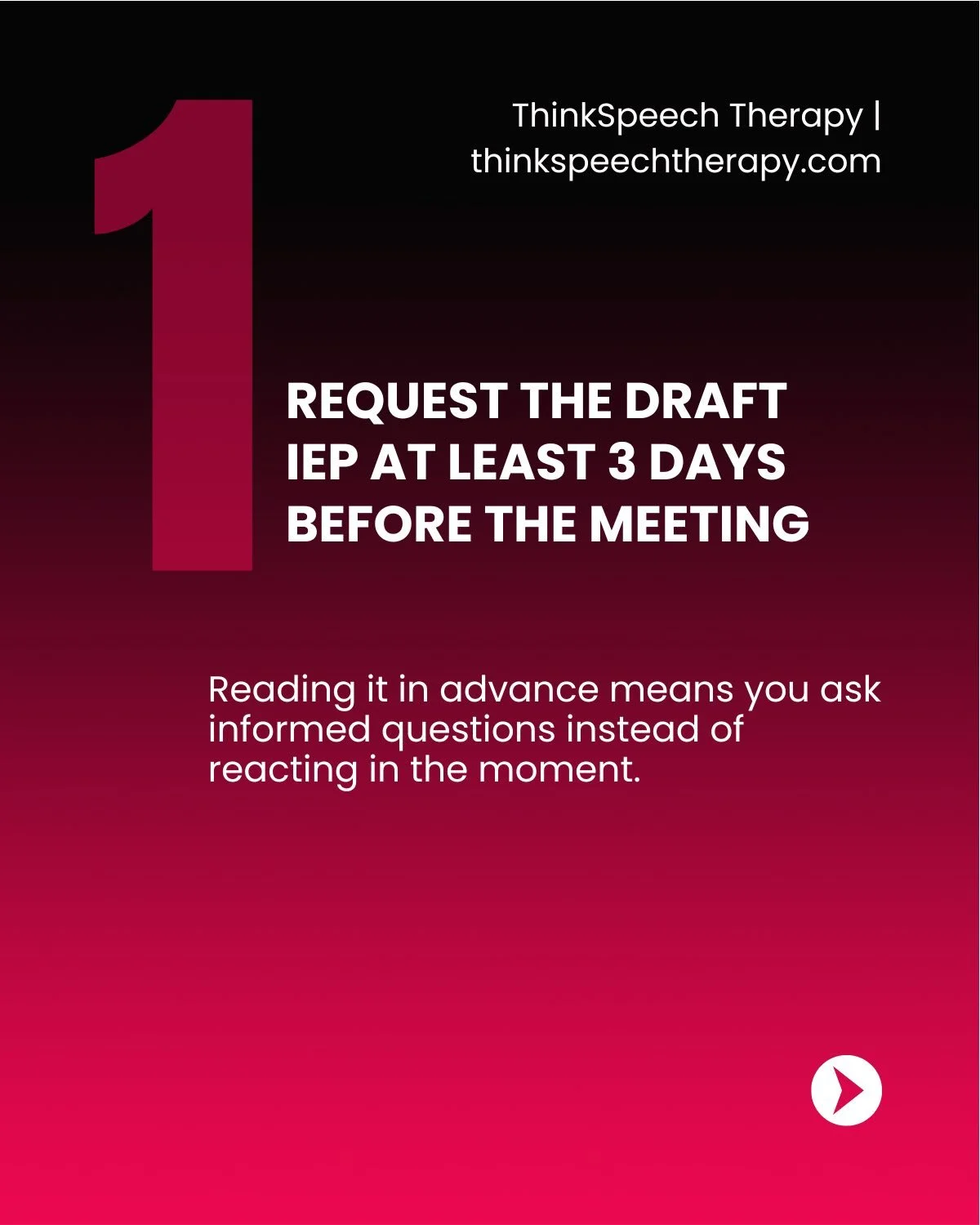
1. Can I receive the draft IEP at least three days before the meeting?

You are never required to read a document that affects your child's entire school year for the first time at the table. Requesting the draft IEP in advance is not a difficult ask — it is your right as a parent. Reading it ahead of time means you arrive with informed questions rather than reacting in the moment. If the team is reluctant to share it early, that itself is important information.

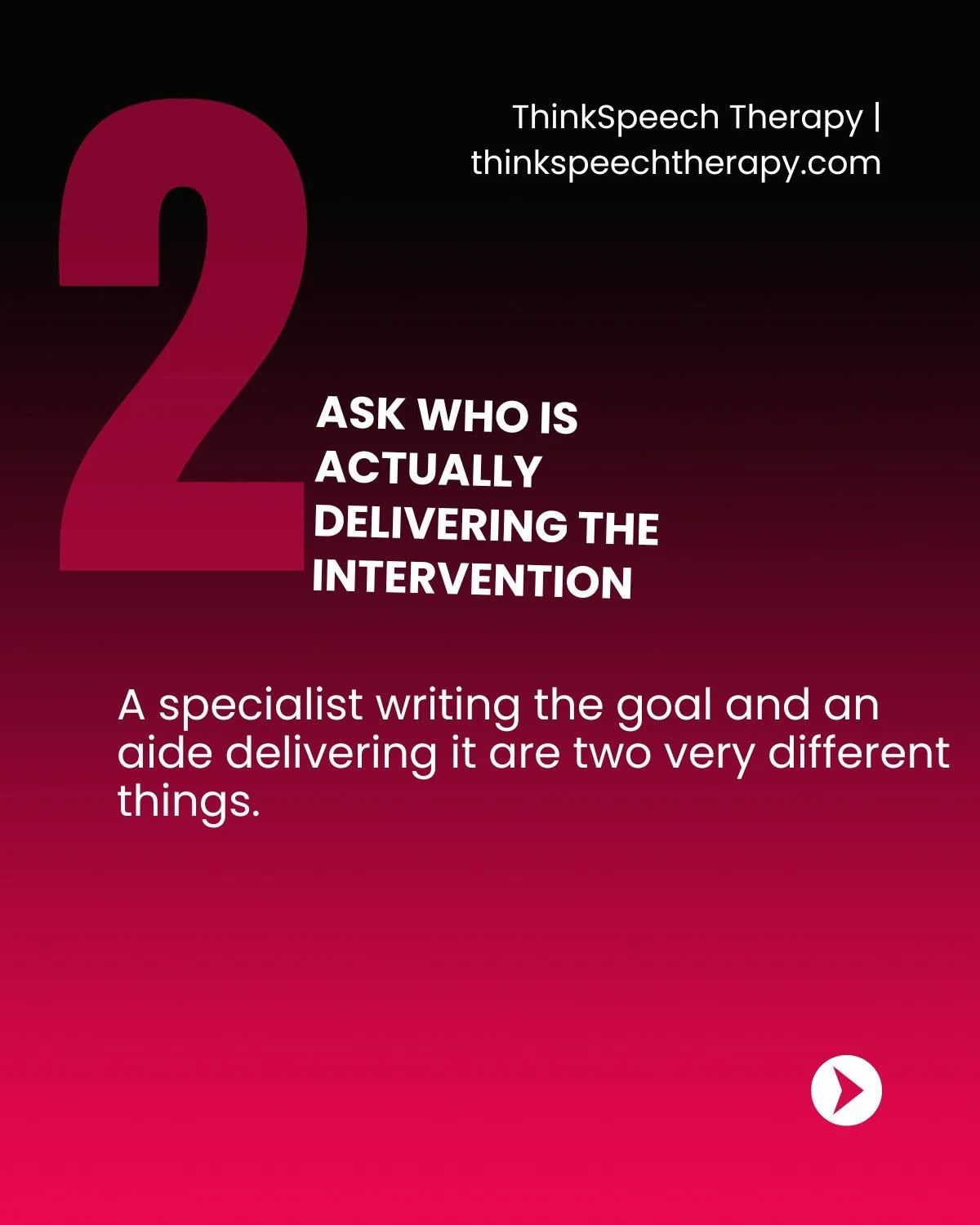
2. Who is actually delivering the intervention — and what is their training?

This is one of the most important and most overlooked questions at any IEP meeting. A specialist writing the goal and an aide delivering it are two very different things. Ask specifically: Who will work with my child? What is their training in structured literacy? How many minutes per week will my child have direct contact with a qualified specialist? The answers will tell you a great deal about whether the IEP is designed to produce real progress.

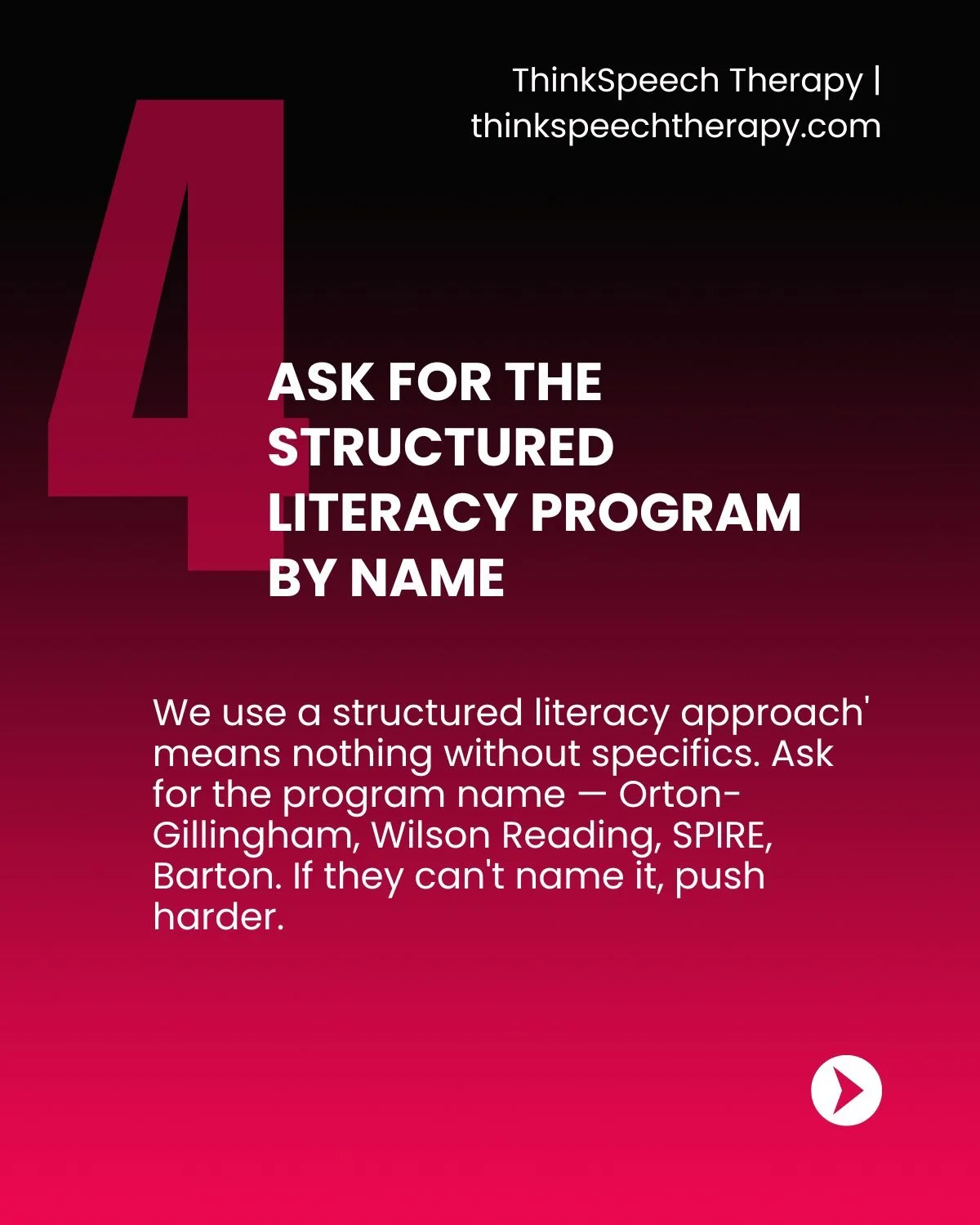
3. What structured literacy program will be used — by name?

"We use a structured literacy approach" means nothing without specifics. Structured literacy is not a brand — it is a framework, and the quality and fidelity of implementation varies enormously. Ask for the name of the program. Orton-Gillingham, Wilson Reading System, SPIRE, and Barton are examples of well-researched, evidence-based programs. If the team cannot name the program, or describes it vaguely as "a multisensory approach," it is entirely appropriate to ask for more detail before signing anything.

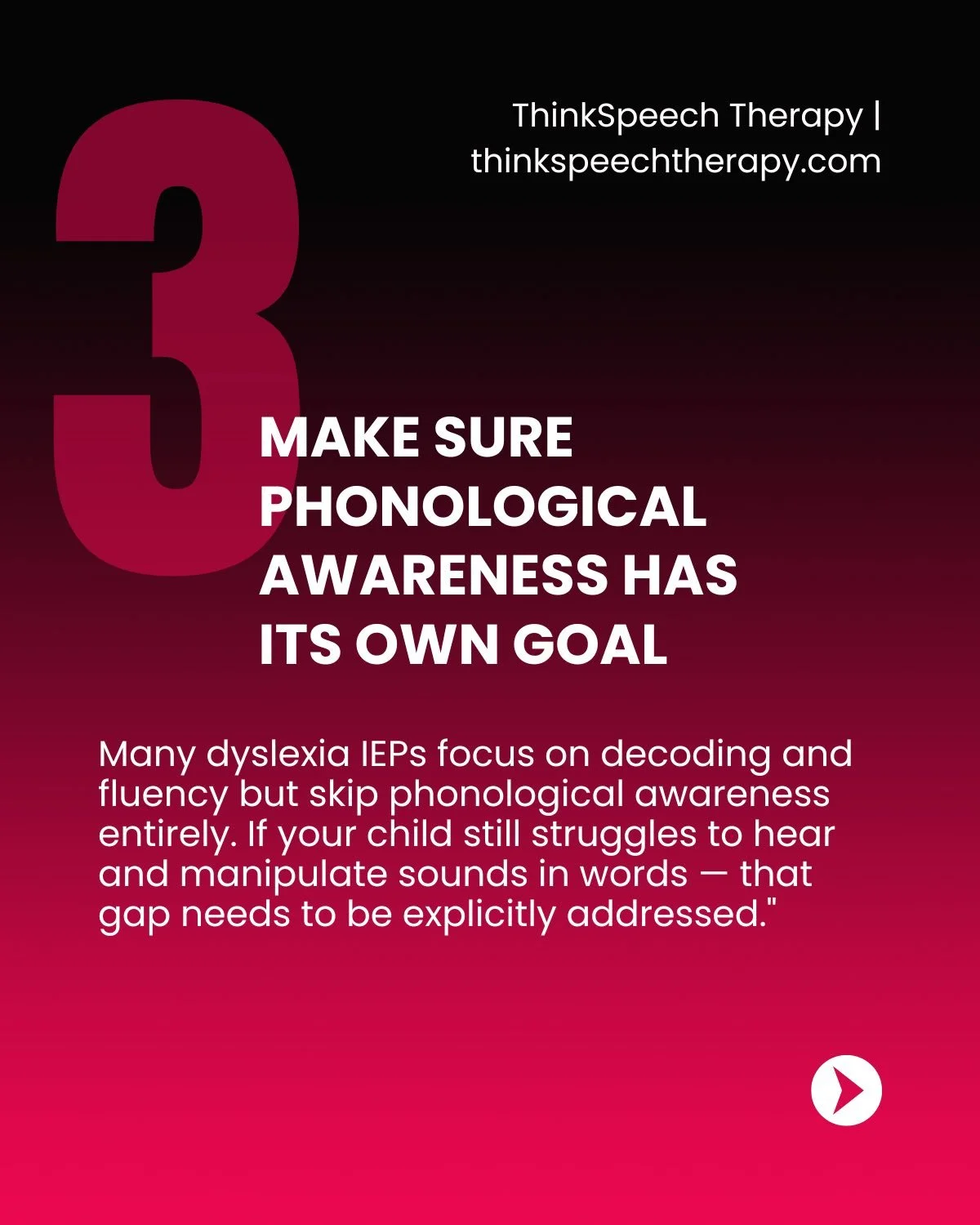
4. Is phonological awareness explicitly addressed in the goals?

Many dyslexia IEPs focus on decoding and reading fluency but skip phonological awareness entirely — the foundational ability to hear and manipulate sounds in spoken words. If your child still struggles at this level, that gap needs its own goal, regardless of grade level. Phonological awareness does not automatically develop with reading instruction. It needs to be directly and systematically taught, and it should be written into the IEP explicitly.

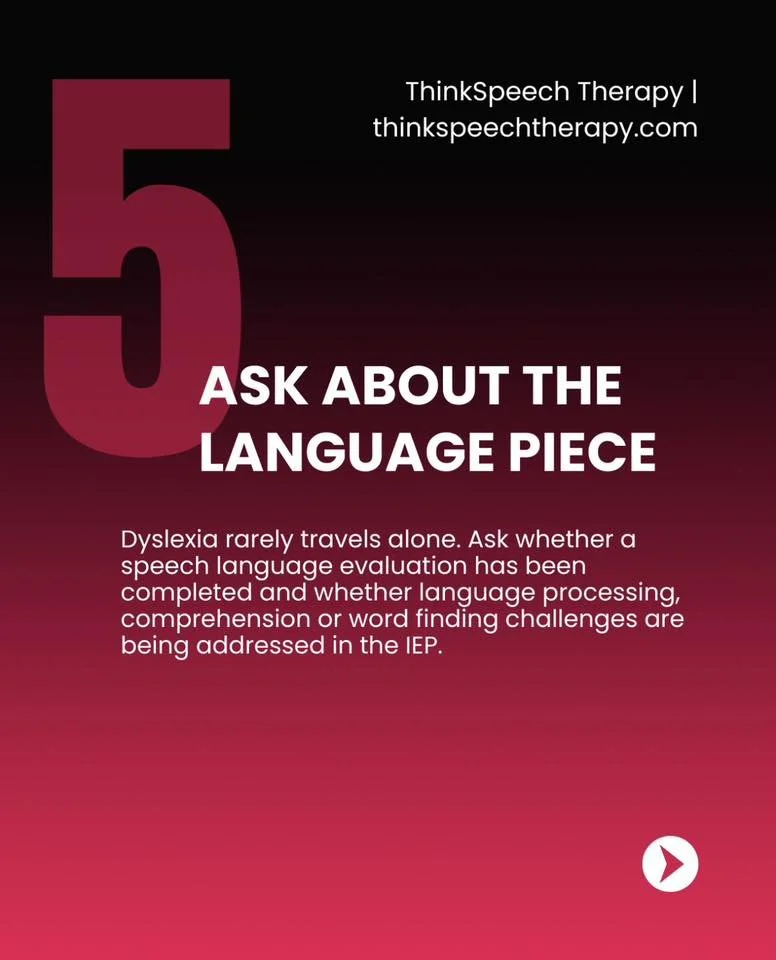
5. Has a speech-language evaluation been completed — and are language goals included?

Dyslexia rarely travels alone. Many children with dyslexia also experience language processing difficulties, comprehension challenges, or word-finding problems that go completely unaddressed in their IEP. A speech-language pathologist can evaluate these areas and, where needed, develop goals that address the full picture of your child's learning profile. If an SLP has not been part of the evaluation or the IEP team, it is worth asking why — and whether one should be.

6. How will these goals translate into real life — not just test scores?

A child who improves on a reading assessment but still avoids reading at home, cries over homework, and tells you "I'm stupid" is not yet where they need to be. Academic scores are one data point — but confidence, independence, and reduced anxiety around reading matter just as much. Ask the team directly: how will we know this is working in your child's daily life? What does success look like outside of a testing environment? Goals that only live on paper are not enough.

7. How often will progress be measured — and what happens if it isn't working?

Goals should be monitored at least every six to nine weeks, not just reviewed at the annual IEP. Ask what data collection looks like in practice: How is progress tracked? Who reviews it? And critically — what is the plan if your child is not making adequate progress? The answer should never be "we'll discuss it at the annual review." A strong IEP includes a responsive plan, not just a waiting period.

Your child deserves an IEP that actually addresses dyslexia — not one that works around it. If you are preparing for an upcoming meeting and want support, ThinkSpeech Therapy offers evaluations and consultations for children with dyslexia in Northern Virginia and via telehealth across Virginia. You do not have to walk into that meeting alone.