
A few weeks ago I reached out to a local elementary school to ask about the science textbook their students were using. I never got a response. What I did receive was a study guide, a condensed, pre-digested summary of the content, with all the complex parts already removed.
So I started asking around. I spoke to three different high schoolers from three different local counties and asked them a simple question: do you have textbooks for any of your classes?
Not one of them said yes. Not even an online version.
I want to be clear that I am not sharing this to point fingers at teachers or schools. I know they are working within systems and constraints that are genuinely difficult. But as a speech-language pathologist who works with children and teens every day, this pattern concerns me deeply. And I think it's worth talking about.
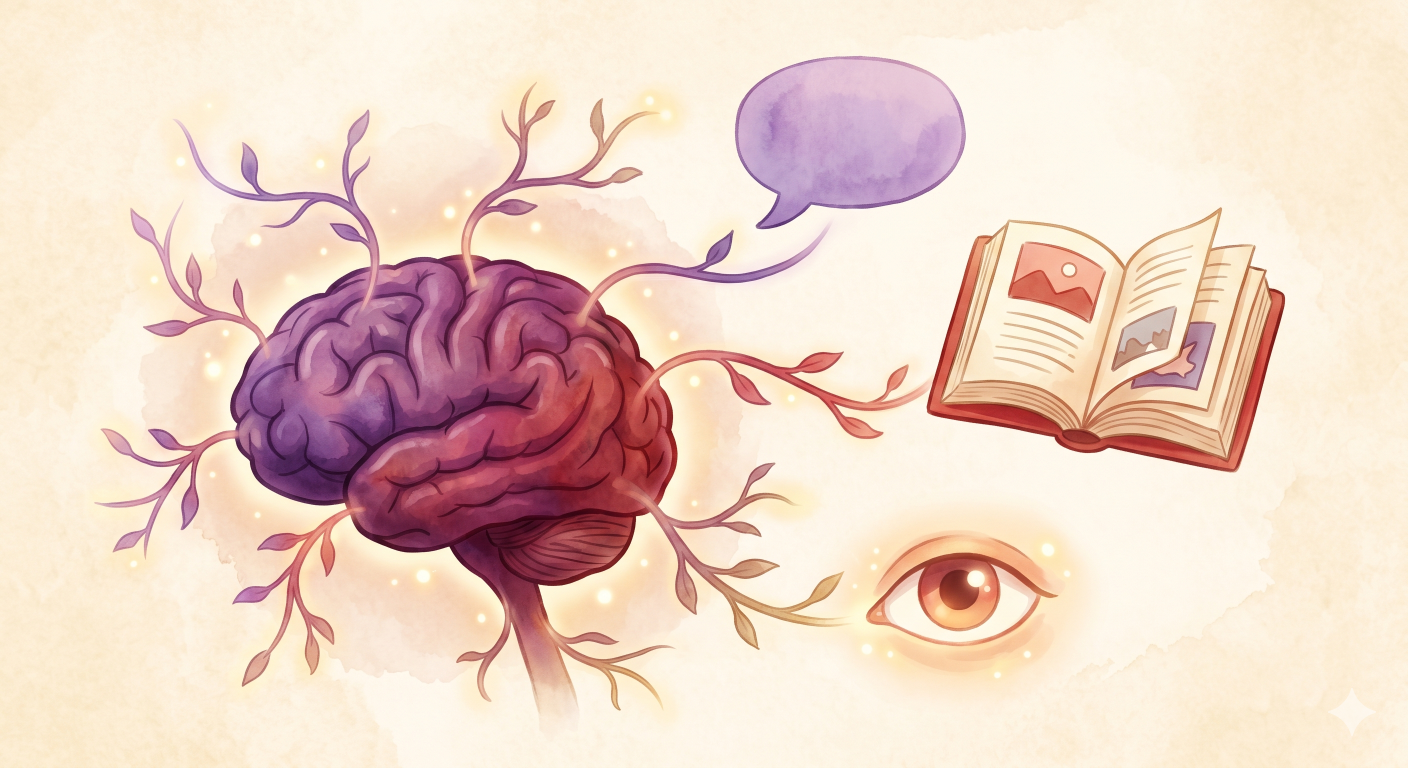
What Complex Text Actually Does to the Brain
When a child sits with a dense, complex chapter and works through it, their brain is doing something remarkable. It isn't just decoding words. It is:
— Building and holding a mental model across multiple paragraphs
— Connecting new information to things already stored in long term memory
— Inferring meaning from context when a word or concept is unfamiliar
— Monitoring comprehension
— noticing when something doesn't make sense and going back
— Synthesizing ideas across sections to form a bigger picture
These are not just reading skills. They are thinking skills. And they are built through repeated exposure to text that is just beyond comfortable. This is what researchers call the productive struggle zone. The difficulty is not a design flaw. It is the whole point.
Why Textbooks Matter Specifically And Why Random Passages Aren't the Same Thing
This is where I want to make an argument that I don't hear made often enough.
Replacing textbooks with random reading comprehension passages is not an equivalent swap. Not even close.
A textbook builds cumulative knowledge where each chapter connects to the last. Vocabulary introduced in chapter two reappears in chapter five. Concepts layer on top of each other deliberately in the same way knowledge actually builds in the brain over time.
A random passage about penguins followed by an unrelated passage about the American Revolution teaches a child to read in isolation. It never teaches them to think in a connected, sustained way across a subject. The brain gets practice at starting over not at building a complete schema about a new concept.
This distinction matters enormously, and it is one of the reasons I believe the shift away from textbooks is having a deeper impact than most people realize.
Why This Is an SLP's Concern
You might be wondering what a speech-language pathologist has to do with textbooks. The answer is: everything.
Language is the engine that drives all of this. Vocabulary, syntax, background knowledge, narrative structure are the tools the brain uses to process complex text. When children are not regularly exposed to rich, challenging language in print, those tools do not develop the way they need to.
The impact is not just academic. The ability to read, hold, and reason through complex information is the foundation of critical thinking.
What You Can Do at Home
None of this is the fault of parents or teachers. We are all working within systems that have quietly shifted without asking whether the tradeoff was worth it. But awareness is where change begins and there is a lot you can do at home to bridge the gap.
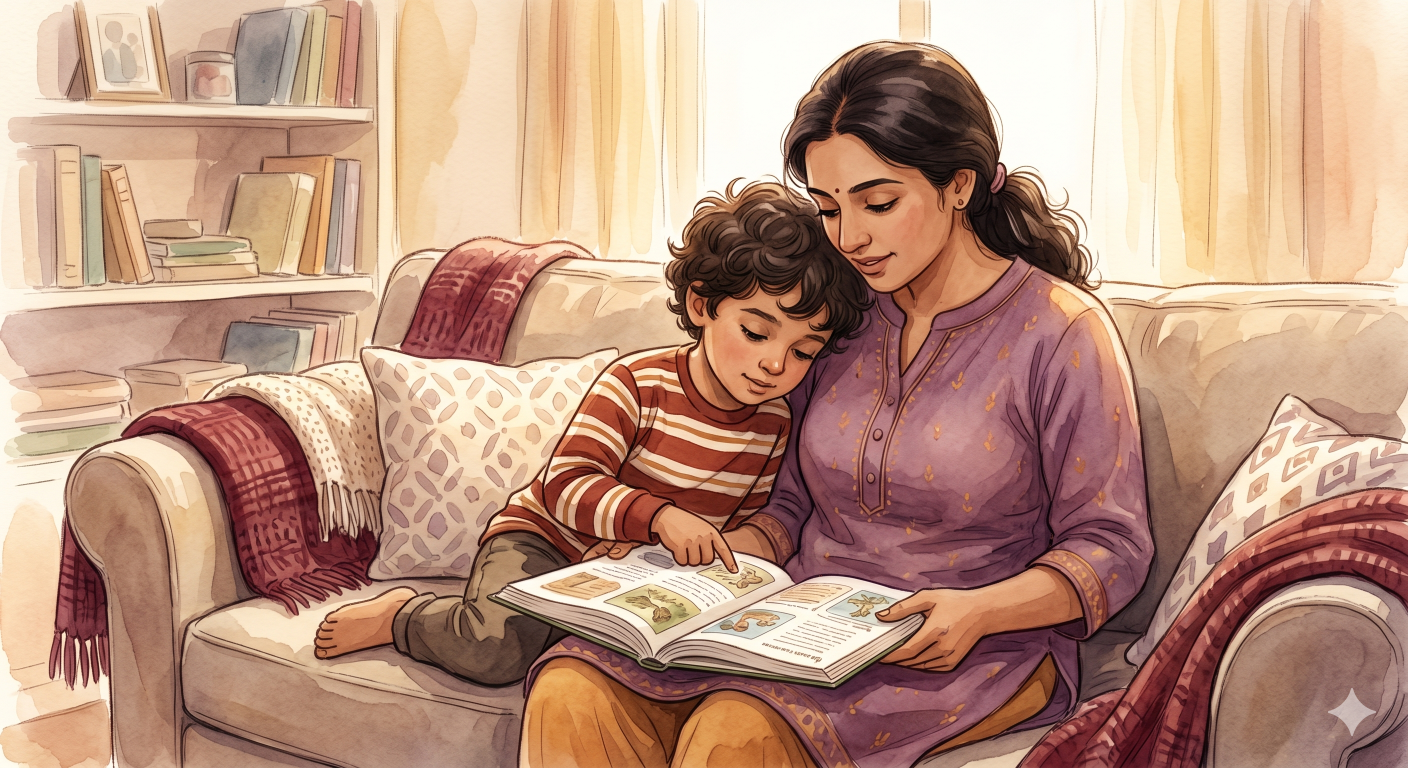
1. Read aloud together — above their level. Choose a book, article, or chapter that is slightly too hard for them to read independently and read it aloud together. Hearing complex language while following along builds vocabulary, syntax, and comprehension in ways independent reading can't yet reach.
2. Pause and talk through unfamiliar words. When your child encounters a word they don't know — don't skip it. Stop, talk about what it might mean from context, then look it up together. That moment of productive struggle is exactly where vocabulary growth happens.
3. Ask "what's the big idea?" after every chapter. Not "what happened" — but "what is this really about?" Pushing your child to synthesize rather than just recall builds the critical thinking muscle that complex text is designed to develop.
4. Bring back the dinner table current event. Share a news story, a magazine article, or even a long-form podcast at the dinner table and talk about it. Exposure to complex ideas through spoken language builds the same cognitive pathways as reading challenging text.
5. Don't rescue them too quickly. When your child hits a hard passage and wants to give up — sit with them in it for a moment before jumping in. The productive struggle is not a sign something is wrong. It is the learning happening.
If you are noticing that your child struggles to process and retain information from longer or more complex texts and you want to understand what's happening and what can be done, I'd love to connect.